
Thursday, October 28, 2010
Sadism, the military and Russell Williams
Despite my distaste for digging into human misery, today we’re tackling Russell Williams, the Canadian Air Force colonel who has been sentenced to life in prison, including solitary confinement for 25 years, for murdering Jessica Lloyd and Marie-France Comeau, and dozens of escalating acts of depravity including abduction and rape.
Describing someone as evil incarnate doesn’t illuminate much. But there’s a method to the melodrama. By describing the murder as senseless and evil, Williams becomes evil - beyond the realm of inquiry. We must simply condemn and punish him. But what happened to those women is awful enough to warrant a few questions. Is there a link between Colonel Williams’ sadism and his chosen career?
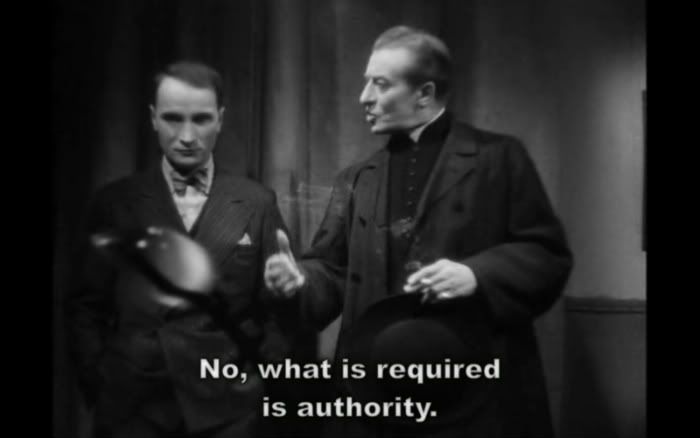
How did a man like this prosper in the military for so many years? Prime Minister Harper said, “Obviously, this is no way reflects on the [Armed] Forces.” The Chief of Air Staff says it “troubles” him that no one knew about Williams’ behaviour. The experts have scoured his past but have found nothing. They’re quick to point out that Williams kept everything hidden: on the surface he was a loving husband. Someone as meticulous as Williams was smart enough not to get caught, and being a high-ranking officer would place him above suspicion, giving him leeway to pursue his crimes until he got careless.
The elephant in the room is the fact that this man was a career military officer. You can see how this might be embarrassing. The Canadian forces have been engaged in ‘saving’ women in Afghanistan from the Taliban for the past eight years. The Taliban are the supposed to be the ones raping and controlling women, not our troops. And yet here’s a commander whose hobby was an escalating violation of women. What's the relation between his sadism, and the violence of his employer?

I don’t think all soldiers are sadists. I have a lot of empathy for soldiers precisely because of the trauma they're exposed to, which can cause sadism, suicidal tendencies and PTSD. But if those pre-existing tendencies exist, wouldn't the army bring them out? Officers in particular have the job of breaking down personalities, making them conform to the arbitrary group discipline of a machine whose job it is to move, work and kill when ordered to.
Here are three examples.
1) Feminists have long noted the link between violence against women and military violence. Women are the object that male soldiers can prove their masculinity against. "Militarism depends on creating an other by declaring distinctions between two groups. The other is asserted to be “less than.” The other must then be controlled or destroyed."
2) An insight from James Bauhaus, a prisoner writing about the psychology of prison guards: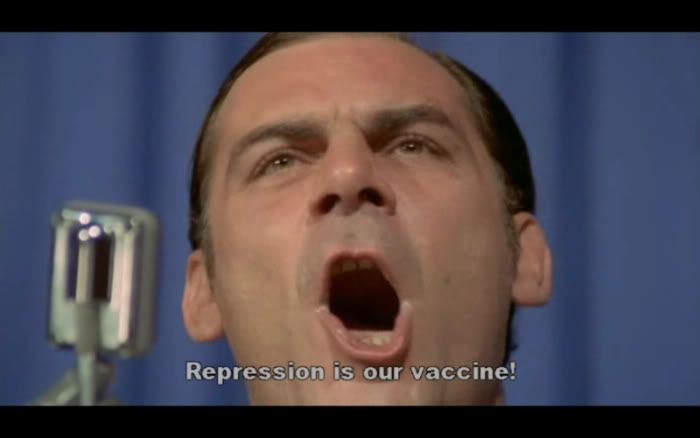
3) Wilhelm Reich, The Mass Psychology of Fascism:
There are plenty of good fiction books about the insanity of the military. Catch-22, The Good Soldier Schweik, Johnny Got His Gun. But I urge you to watch some non-fiction, Winter Soldier.
Filmed in 1972, it’s the testimony of US soldiers talking about what they did and witnessed in Vietnam. The men are confronting that they tortured and killed real people. You can see the trauma they've faced, recounting what they’ve lived with day and night. Is there really much difference between what these men did and what happened to Lloyd and Comeau? How about U.S. soldiers in Iraq? How about official UK army policy training interrogators in torture? Canadian complicity in torture? These examples scratch the surface. Williams never served in Afghanistan, but there's a disturbing parallel between the horrors he visited on women and the horrors militaries pile on civilians.
Williams' crimes were textbook suppression of sexuality and rebellion. The organisation he worked for relied on suppression. Correlation does not equal causation. But it's worth investigating why there's so much correlation, between different militaries, different wars and a depressingly consistent sadism. Because it's the worst form of hypocrisy to train people to kill when asked to, and then act horrified when one of the enforcers of that system turns that drive on those around them. The army probably didn’t create Colonel William’s sadism. But it may have provided a psychological structure that rewarded his frustrated sense of self with absolute authority. If so, two women paid for that with their dignity and their lives.
Describing someone as evil incarnate doesn’t illuminate much. But there’s a method to the melodrama. By describing the murder as senseless and evil, Williams becomes evil - beyond the realm of inquiry. We must simply condemn and punish him. But what happened to those women is awful enough to warrant a few questions. Is there a link between Colonel Williams’ sadism and his chosen career?

How did a man like this prosper in the military for so many years? Prime Minister Harper said, “Obviously, this is no way reflects on the [Armed] Forces.” The Chief of Air Staff says it “troubles” him that no one knew about Williams’ behaviour. The experts have scoured his past but have found nothing. They’re quick to point out that Williams kept everything hidden: on the surface he was a loving husband. Someone as meticulous as Williams was smart enough not to get caught, and being a high-ranking officer would place him above suspicion, giving him leeway to pursue his crimes until he got careless.
The elephant in the room is the fact that this man was a career military officer. You can see how this might be embarrassing. The Canadian forces have been engaged in ‘saving’ women in Afghanistan from the Taliban for the past eight years. The Taliban are the supposed to be the ones raping and controlling women, not our troops. And yet here’s a commander whose hobby was an escalating violation of women. What's the relation between his sadism, and the violence of his employer?

I don’t think all soldiers are sadists. I have a lot of empathy for soldiers precisely because of the trauma they're exposed to, which can cause sadism, suicidal tendencies and PTSD. But if those pre-existing tendencies exist, wouldn't the army bring them out? Officers in particular have the job of breaking down personalities, making them conform to the arbitrary group discipline of a machine whose job it is to move, work and kill when ordered to.
Here are three examples.
1) Feminists have long noted the link between violence against women and military violence. Women are the object that male soldiers can prove their masculinity against. "Militarism depends on creating an other by declaring distinctions between two groups. The other is asserted to be “less than.” The other must then be controlled or destroyed."
2) An insight from James Bauhaus, a prisoner writing about the psychology of prison guards:
personalities tend to warp toward sadism as certainly as absolute power corrupts absolutely. Sadism results from there being no possibility of real accountability.
A good correctional officer is the new guy: usually one who has had no contact with the military. If he is a good guy despite military service, he's usually one who has never actually killed anyone. Extensive training in efficient mass-murder techniques tends to make life cheap, especially when it belongs to the people we are programmed to hate.

3) Wilhelm Reich, The Mass Psychology of Fascism:
Sadism originates from ungratified orgastic yearnings. The facade is inscribed with such names as "comradeship," "honor," "voluntary discipline." Concealed behind the facade, we find secret revolt, depression to the point of rebellion, owing to the hindrance of every expression of personal life, especially of sexuality. (192)This suppression has a function:
a large part of the sadism made use of by the ruling class to suppress and exploit other classes is to be ascribed chiefly to the sadism that stems from suppressed sexuality. (384)Note the theme: militaries, fascism and capitalism all use repression, and particularly sexual repression, to control men. That gets externalized against women, prisoners and anyone who's weaker.
There are plenty of good fiction books about the insanity of the military. Catch-22, The Good Soldier Schweik, Johnny Got His Gun. But I urge you to watch some non-fiction, Winter Soldier.
Filmed in 1972, it’s the testimony of US soldiers talking about what they did and witnessed in Vietnam. The men are confronting that they tortured and killed real people. You can see the trauma they've faced, recounting what they’ve lived with day and night. Is there really much difference between what these men did and what happened to Lloyd and Comeau? How about U.S. soldiers in Iraq? How about official UK army policy training interrogators in torture? Canadian complicity in torture? These examples scratch the surface. Williams never served in Afghanistan, but there's a disturbing parallel between the horrors he visited on women and the horrors militaries pile on civilians.
Williams' crimes were textbook suppression of sexuality and rebellion. The organisation he worked for relied on suppression. Correlation does not equal causation. But it's worth investigating why there's so much correlation, between different militaries, different wars and a depressingly consistent sadism. Because it's the worst form of hypocrisy to train people to kill when asked to, and then act horrified when one of the enforcers of that system turns that drive on those around them. The army probably didn’t create Colonel William’s sadism. But it may have provided a psychological structure that rewarded his frustrated sense of self with absolute authority. If so, two women paid for that with their dignity and their lives.
Labels: military, Russell Williams, sadism, violence against women


Saturday, October 23, 2010
Die Antwoord - Evil Boy
Die Antwoord are a South African electro-hip hop group. They've been blowing up on the internet for a few months now; I saw them live in September and they put on an amazing show. Without knowing more about South African music, I couldn't say what their influences are, exactly; but they seem to combine hip hop, rave and an artistic sensibility. I'm fascinated by the white working class Afrikaans identity - apparently adopted quite consciously by Watkin Jones, the lead singer, who has a career as a performance artist.
Their latest release, Evil Boy, features Wanga, an 18 year old member of the Xhosa tribe. The video is incredible: ornate, grotesque and hyper-sexual. For your NSFW viewing pleasure:
Spoiler: you will have noticed the homophobic comments. According to Boing Boing, the story is that Wanga's coming-of-age ritual includes getting circumcised. Since he refuses to be circumcised, his mates have called him gay and effeminate. By saying, I'm not a gay, this dick is for the ladies, he's rejecting the charge that that makes him less of a man. This is not a comment directed at gays.
I have no doubt Wanga is sincere in just wanting to defend himself and doesn't intend an anti-gay slur. I wonder, however, about the merits of translating "I'm not a gay" without any backstory. Most viewers won't know this is about him, it just looks like macho posturing, and given the recent spate of gay suicides in the U.S., more homophobia is even more unnecessary.
It could also be a big in-joke, because there are an awful lot of penises in a video proclaiming heterosexuality. Some men can be remarkably good at missing homoerotic subtext, but it's just a text here, I mean Ninja sings into a penis at one point.
I don't blame an 18 year old for not considering how his comments might be received on a different continent, nor in thinking that gay = less manly; but I wonder at the artistic director. It's great Die Antwoord are pro-queer and pro-sex; at the concert I was at, it was clear they had a large queer following (one man got on stage and kissed Ninja on the cheek; on the way out the door afterwards, I overheard a girl telling her friends, "I can't believe I slapped Yolandi Visser on the ass!") Artists aren't responsible for how their work is received, but when something is so obviously open to misinterpretation, they could try a little harder.
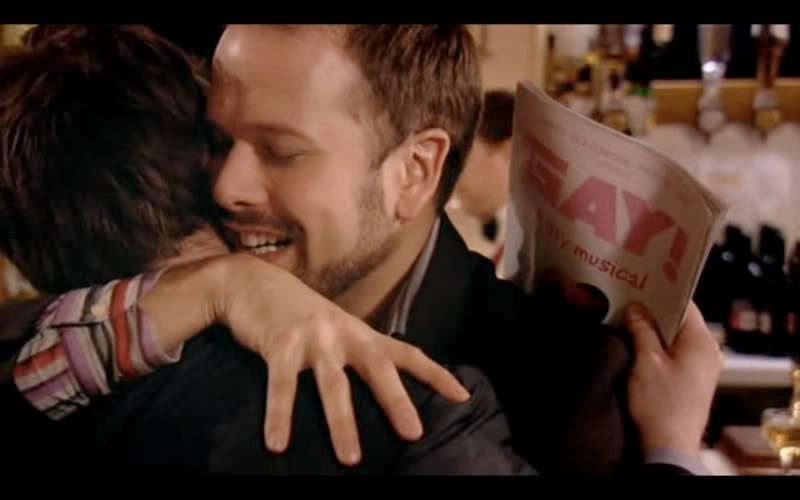
Still not acceptable? - The It Crowd
Their latest release, Evil Boy, features Wanga, an 18 year old member of the Xhosa tribe. The video is incredible: ornate, grotesque and hyper-sexual. For your NSFW viewing pleasure:
EVIL BOY (official) from Die Antwoord on Vimeo.
Spoiler: you will have noticed the homophobic comments. According to Boing Boing, the story is that Wanga's coming-of-age ritual includes getting circumcised. Since he refuses to be circumcised, his mates have called him gay and effeminate. By saying, I'm not a gay, this dick is for the ladies, he's rejecting the charge that that makes him less of a man. This is not a comment directed at gays.
I have no doubt Wanga is sincere in just wanting to defend himself and doesn't intend an anti-gay slur. I wonder, however, about the merits of translating "I'm not a gay" without any backstory. Most viewers won't know this is about him, it just looks like macho posturing, and given the recent spate of gay suicides in the U.S., more homophobia is even more unnecessary.
It could also be a big in-joke, because there are an awful lot of penises in a video proclaiming heterosexuality. Some men can be remarkably good at missing homoerotic subtext, but it's just a text here, I mean Ninja sings into a penis at one point.
I don't blame an 18 year old for not considering how his comments might be received on a different continent, nor in thinking that gay = less manly; but I wonder at the artistic director. It's great Die Antwoord are pro-queer and pro-sex; at the concert I was at, it was clear they had a large queer following (one man got on stage and kissed Ninja on the cheek; on the way out the door afterwards, I overheard a girl telling her friends, "I can't believe I slapped Yolandi Visser on the ass!") Artists aren't responsible for how their work is received, but when something is so obviously open to misinterpretation, they could try a little harder.

Still not acceptable? - The It Crowd
Labels: Die Antwoord, homophobia, sexuality
Sunday, December 27, 2009
Victor’s Top 10 Albums of the 00s
It’s the end of a decade and time to make a list. A few publications have compiled definitive Top 10 (or Top 50) album lists, so why not me? The only problem being: I don’t think I’ve heard 10 albums from the 00s: on the contrary, this decade is when I got into music made 40 years ago. So to reach 10, I’m including albums I first heard in the 00s.
This makes my list so subjective as to be nearly useless. After all, a list is supposed to provide boundaries to something: genre, timeline or fads, etc. My list delimits nothing more than my mood over the past 10 years... which, now that I look at it, is part of the brooding artist-intellectual image I try so hard to cultivate.

Darling, I tire of my absinthe - Mick Jagger, Performance
10. War & Peace – Edwin Starr
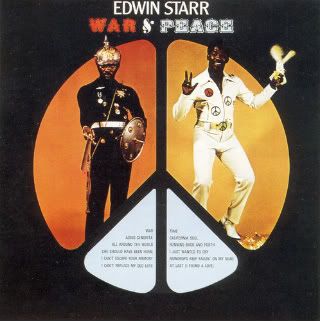
If you had a party and could only choose a single album, you could do worse than leave this on. Starr is the definition of high-energy, his band providing solid up-tempo funk while he throws everything at the wall: wailing, pidgin Spanish, he even has a chorus where he faux-cries to the rhythm. Everyone knows War (What Is It Good For?), his breakout hit, but the rest of the album provides similarly sober highlights at odds with his enthusiasm, including Time, where he muses on his own mortality while the band mimics an alarm clock.
9. Lupine Howl – The Carnivorous Adventures of Lupine Howl
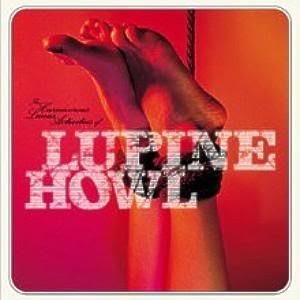
Lupine Howl formed from the bulk of Spiritualized after Jason Pierce kicked them out for labour organizing. In a fair world, they would’ve become just as big as Pierce’s ego. They take the drugs and alienation of Spiritualized and ramp it up, crafting 9 blistering odes to paranoia, loneliness and all the other things one feels once the drugs wear off. The guitars are fuzzy, the vocals are processed, the jams are spacey and psychedelic, but Lupine Howl actually go one better than their predecessor, keeping their arrangements tight and never falling into the latter’s introverted morosis. (If that’s not a word, it should be.) The Jam That Ate Itself says it best: “Gonna find me a UFO and get the fuck out of here.” Sign a better contract first, boys.
8. Alan Price – Lucky Man

Yet to be ground down - Malcolm McDowell, O Lucky Man!
Price made this as the soundtrack to O Lucky Man!, Lindsay Anderson’s post-‘68 rage against the dying of the leftist light. It’s a brilliant film, detailing the descent of Michael Travis, Malcolm McDowell’s bright-eyed naïf, into poverty and disillusion. Price’s soundtrack is like McDowell’s guardian angel, singing bittersweet foreshadowing ballads about life under capitalism. Had Travis paid attention, he would’ve heard Price telling him work & life is a struggle just to survive with a smile on your face. Travis never learns; yet Price studiously avoids mawkish folk, composing bright, upbeat, poppy numbers that belie the tragedy he’s observing.
7. Keane – Under The Iron Sea

Well turned out lads
OK, OK, guilty pleasure. Keane makes solid pop songs, with an edge of self-blame, passive-aggressivity and bitterness. What could be more British? The piano floats delicately over the melody, the background choruses are hummable: I challenge anyone to find better music for a Sunday afternoon stuck in a suburb. Sure, lead singer Tom Chaplin’s breathing can get a bit laboured at times; and on occasion I just want to slap him and tell him to be happier. But since we know pop music demands that every aspect of a failed relationship be submitted to scrutiny, I can think of few groups better suited for the task.
6. The Postal Service – Give Up
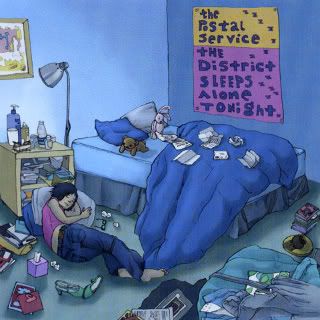
This was my soundtrack to 2004, and today when I heard it in a restaurant I still knew every melody. This is a side project of Death Cab For Cutie, whom I always found too tortured and whiny for my tastes; but The Postal Service is indie rock done right. Which is to say, with keyboards instead of guitars, and unironic levity. I hate a certain species of indie rock, one that makes a virtue of an inability to sing and a middle class affectation of detachment. I want my musicians to belt it out with genuine feeling – and here, The Postal Service prove with their bouncy electro-pop that hipsters have feelings, too.
5. Sir Joe Quarterman & Free Soul – I Got So Much Trouble In My Mind
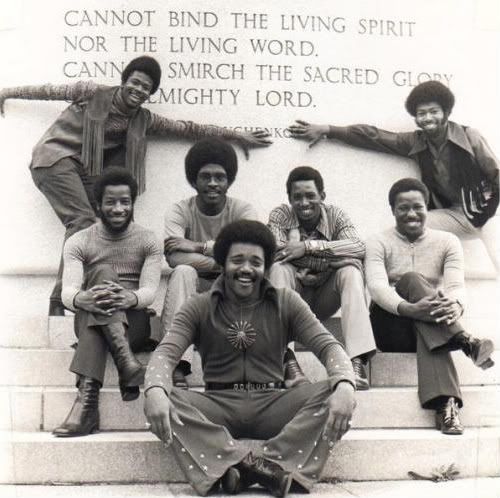
But they look so happy
This was the first funk disc I ever bought, and it’s still one of the best. Sir Joe wasn’t one of the leading lights of funk, and I suspect it’s because he was a little too honest. He sings about both social and his very personal troubles: he pays too many taxes, his girlfriend is pregnant, his job is hard. He’s even got a whole song devoted to finding one friend – literally, “Gonna get me a friend one day.” He’s like the guy at the party who corners you and insists on telling you all his problems. But backed up by Free Soul, each tale of woe is transformed into a deep, funky groove: the bassline and horns play back and forth, and in a nod to the psych-RnB encounter there’s some feedback-laced guitars to provide extra edge. From the title track: “Give me the strength to carry on, because everything I got is just about gone, and I think about it, I worry about it, I dream about it.” But suddenly you’re dancing to Sir Joe’s blues and everything’s fine again.
4. Vicki Anderson – Message From A Soul Sister
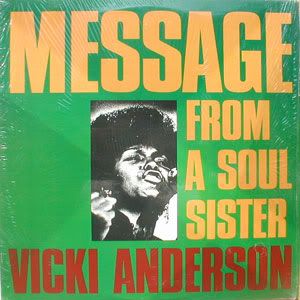
Anderson was part of James Brown’s back-up band; while you can hear his influence on the extended jams and call-and-response, Anderson outshines her roots with her biggest asset, her voice. She tackles gospel-inflected soul, straight-up funk and lugubrious ballads, and the whole time she sounds like she’s standing back from the mic so she doesn’t break it. When she does let loose, like in the civil-rights themed In The Land of Milk and Honey, it’s pure longing and regret. This is not music that’s ashamed of its feelings: Anderson shares her rage and joy, and the lush orchestration is barely enough to channel it. For everyone who thinks any piece of rock music produced in the last 20 years has ‘soul’, this should be required listening.
3. Isaac Hayes – Hot Buttered Soul
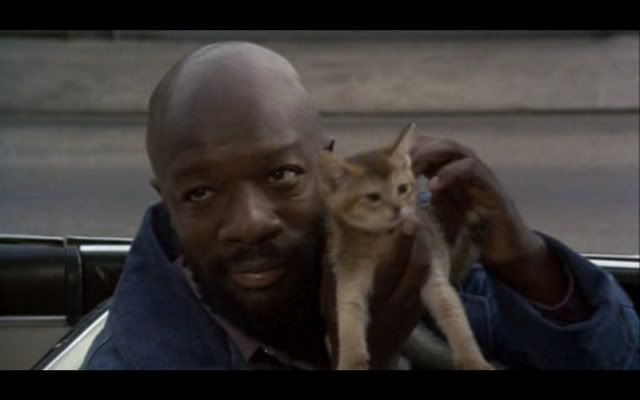
Real men like cats - Isaac Hayes, Truck Turner
Isaac Hayes was the ultimate in masculinity, before that meant getting oiled up and finding a fellow MMAer to hug. If you thought you were in love, or lonely, your feelings were only margarine to Isaac Hayes' rich creamery butter. Hot Buttered Soul only has four songs, because that’s all the Man needed to express sorrow, lust, regret and love, respectively. I won’t try to describe how smooth his voice is, or how masterful his stage presence in. (Watch Wattstax to see him in 1973 at his prime, when he was the most popular RnB singer ever.) But a brief description of Track 3 will suffice. Hayes takes the most famous ballad about emotional immaturity and running away, By The Time I Get To Phoenix, and transforms it into the tragic story of a young man who devotes his life to passion and gets his heart stomped on. At the moment he discovers he’s being cheated on, Hayes breathes, “Baby, momma – why?” and thrusts more pathos into that single syllable than every single James Blunt, Nickelback and Celine Dion song put together. Check out his 19 minute arrangement for an even more epic emotional ride. The strings and his own saxophone playing are top-rate, but they’re strictly a backdrop to Isaac Hayes’ soul, which we’re lucky that he shared with us.
2. Roots Manuva – Run Come Save Me
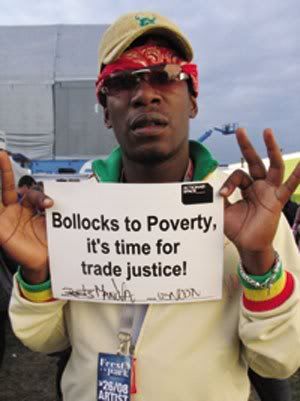
We actually need production justice, but I'll forgive him
I realize having only one hip-hop album on this list qualifies me for What White People Like – so be it. Roots Manuva is consistently the most creative hip-hop artist on either side of the Atlantic. His deep, dub-inflected beats draw as much from Jamaica as America, veering close to Tricky’s weed-fogged haze without getting lost in it. His lyrics betray a complex, political understanding of the music industry, social problems and his Black British identity. Witness (1 Hope) was the big hit off that album and remains as infectious as H1N1; Swords In The Dirt is frighteningly danceable, while Sinny Sin Sins tells a languid tale of the contradictions of growing up Baptist. When the bass kicks in, you have to move, but you don’t have to wince at the words.
1. Manic Street Preachers – Know Your Enemy
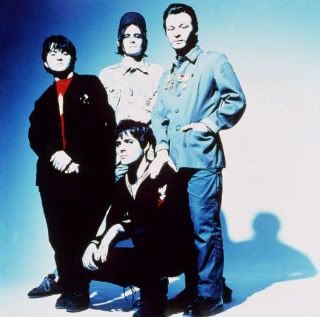
The Manics, in happier - er, earlier days
Despite having an insane amount of fun seeing the Manics in October, I actually don’t think they’ve had that good a decade. Lifeblood was forced; Send Away The Tigers felt like a belated stab at the teen market; and let’s forget the embarrassing covers compilation Lipstick Traces. Their last truly good album was 2001’s Know Your Enemy, in which they’re in top form, musically and politically. It sees a return to a heavier, angry sound after the stadium anthems of the late 90s; this has to be connected to their subject matter, which draws on a range of artistic and cultural references to alienation, McCarthyism and imperialism. If it sounds complex, it is, which allows the album to yield repeated listenings without getting tired – I’ve had this on heavy rotation for 9 years and it still stands up. The guitars and rhythms are hard and driving but never overwhelming. My personal favourite, Freedom of Speech Won’t Feed My Children, sees them lambasting celebrity liberals for celebrating democracy while ignoring capitalist exploitation (“We love to kiss the Dalai Lama’s ass, cos he is such a holy man, Free to eat and buy anything, Free to fuck from Paris to Beijing”). What’s not to love?
Runners-up: actually, a lot of hip-hop should be on this list. Blackalicious’ Blazing Arrow, Danger Mouse’s The Grey Album, Dizzie Rascal, The Streets. Hard-Fi deserves special mention for making anti-capitalist pub sing-a-longs. Jarvis Cocker’s solo work shows the impact of maturity on talent. Ah well – next decade.

For the next cut
This makes my list so subjective as to be nearly useless. After all, a list is supposed to provide boundaries to something: genre, timeline or fads, etc. My list delimits nothing more than my mood over the past 10 years... which, now that I look at it, is part of the brooding artist-intellectual image I try so hard to cultivate.

Darling, I tire of my absinthe - Mick Jagger, Performance
10. War & Peace – Edwin Starr

If you had a party and could only choose a single album, you could do worse than leave this on. Starr is the definition of high-energy, his band providing solid up-tempo funk while he throws everything at the wall: wailing, pidgin Spanish, he even has a chorus where he faux-cries to the rhythm. Everyone knows War (What Is It Good For?), his breakout hit, but the rest of the album provides similarly sober highlights at odds with his enthusiasm, including Time, where he muses on his own mortality while the band mimics an alarm clock.
9. Lupine Howl – The Carnivorous Adventures of Lupine Howl

Lupine Howl formed from the bulk of Spiritualized after Jason Pierce kicked them out for labour organizing. In a fair world, they would’ve become just as big as Pierce’s ego. They take the drugs and alienation of Spiritualized and ramp it up, crafting 9 blistering odes to paranoia, loneliness and all the other things one feels once the drugs wear off. The guitars are fuzzy, the vocals are processed, the jams are spacey and psychedelic, but Lupine Howl actually go one better than their predecessor, keeping their arrangements tight and never falling into the latter’s introverted morosis. (If that’s not a word, it should be.) The Jam That Ate Itself says it best: “Gonna find me a UFO and get the fuck out of here.” Sign a better contract first, boys.
8. Alan Price – Lucky Man

Yet to be ground down - Malcolm McDowell, O Lucky Man!
Price made this as the soundtrack to O Lucky Man!, Lindsay Anderson’s post-‘68 rage against the dying of the leftist light. It’s a brilliant film, detailing the descent of Michael Travis, Malcolm McDowell’s bright-eyed naïf, into poverty and disillusion. Price’s soundtrack is like McDowell’s guardian angel, singing bittersweet foreshadowing ballads about life under capitalism. Had Travis paid attention, he would’ve heard Price telling him work & life is a struggle just to survive with a smile on your face. Travis never learns; yet Price studiously avoids mawkish folk, composing bright, upbeat, poppy numbers that belie the tragedy he’s observing.
7. Keane – Under The Iron Sea

Well turned out lads
OK, OK, guilty pleasure. Keane makes solid pop songs, with an edge of self-blame, passive-aggressivity and bitterness. What could be more British? The piano floats delicately over the melody, the background choruses are hummable: I challenge anyone to find better music for a Sunday afternoon stuck in a suburb. Sure, lead singer Tom Chaplin’s breathing can get a bit laboured at times; and on occasion I just want to slap him and tell him to be happier. But since we know pop music demands that every aspect of a failed relationship be submitted to scrutiny, I can think of few groups better suited for the task.
6. The Postal Service – Give Up

This was my soundtrack to 2004, and today when I heard it in a restaurant I still knew every melody. This is a side project of Death Cab For Cutie, whom I always found too tortured and whiny for my tastes; but The Postal Service is indie rock done right. Which is to say, with keyboards instead of guitars, and unironic levity. I hate a certain species of indie rock, one that makes a virtue of an inability to sing and a middle class affectation of detachment. I want my musicians to belt it out with genuine feeling – and here, The Postal Service prove with their bouncy electro-pop that hipsters have feelings, too.
5. Sir Joe Quarterman & Free Soul – I Got So Much Trouble In My Mind

But they look so happy
This was the first funk disc I ever bought, and it’s still one of the best. Sir Joe wasn’t one of the leading lights of funk, and I suspect it’s because he was a little too honest. He sings about both social and his very personal troubles: he pays too many taxes, his girlfriend is pregnant, his job is hard. He’s even got a whole song devoted to finding one friend – literally, “Gonna get me a friend one day.” He’s like the guy at the party who corners you and insists on telling you all his problems. But backed up by Free Soul, each tale of woe is transformed into a deep, funky groove: the bassline and horns play back and forth, and in a nod to the psych-RnB encounter there’s some feedback-laced guitars to provide extra edge. From the title track: “Give me the strength to carry on, because everything I got is just about gone, and I think about it, I worry about it, I dream about it.” But suddenly you’re dancing to Sir Joe’s blues and everything’s fine again.
4. Vicki Anderson – Message From A Soul Sister

Anderson was part of James Brown’s back-up band; while you can hear his influence on the extended jams and call-and-response, Anderson outshines her roots with her biggest asset, her voice. She tackles gospel-inflected soul, straight-up funk and lugubrious ballads, and the whole time she sounds like she’s standing back from the mic so she doesn’t break it. When she does let loose, like in the civil-rights themed In The Land of Milk and Honey, it’s pure longing and regret. This is not music that’s ashamed of its feelings: Anderson shares her rage and joy, and the lush orchestration is barely enough to channel it. For everyone who thinks any piece of rock music produced in the last 20 years has ‘soul’, this should be required listening.
3. Isaac Hayes – Hot Buttered Soul

Real men like cats - Isaac Hayes, Truck Turner
Isaac Hayes was the ultimate in masculinity, before that meant getting oiled up and finding a fellow MMAer to hug. If you thought you were in love, or lonely, your feelings were only margarine to Isaac Hayes' rich creamery butter. Hot Buttered Soul only has four songs, because that’s all the Man needed to express sorrow, lust, regret and love, respectively. I won’t try to describe how smooth his voice is, or how masterful his stage presence in. (Watch Wattstax to see him in 1973 at his prime, when he was the most popular RnB singer ever.) But a brief description of Track 3 will suffice. Hayes takes the most famous ballad about emotional immaturity and running away, By The Time I Get To Phoenix, and transforms it into the tragic story of a young man who devotes his life to passion and gets his heart stomped on. At the moment he discovers he’s being cheated on, Hayes breathes, “Baby, momma – why?” and thrusts more pathos into that single syllable than every single James Blunt, Nickelback and Celine Dion song put together. Check out his 19 minute arrangement for an even more epic emotional ride. The strings and his own saxophone playing are top-rate, but they’re strictly a backdrop to Isaac Hayes’ soul, which we’re lucky that he shared with us.
2. Roots Manuva – Run Come Save Me

We actually need production justice, but I'll forgive him
I realize having only one hip-hop album on this list qualifies me for What White People Like – so be it. Roots Manuva is consistently the most creative hip-hop artist on either side of the Atlantic. His deep, dub-inflected beats draw as much from Jamaica as America, veering close to Tricky’s weed-fogged haze without getting lost in it. His lyrics betray a complex, political understanding of the music industry, social problems and his Black British identity. Witness (1 Hope) was the big hit off that album and remains as infectious as H1N1; Swords In The Dirt is frighteningly danceable, while Sinny Sin Sins tells a languid tale of the contradictions of growing up Baptist. When the bass kicks in, you have to move, but you don’t have to wince at the words.
1. Manic Street Preachers – Know Your Enemy

The Manics, in happier - er, earlier days
Despite having an insane amount of fun seeing the Manics in October, I actually don’t think they’ve had that good a decade. Lifeblood was forced; Send Away The Tigers felt like a belated stab at the teen market; and let’s forget the embarrassing covers compilation Lipstick Traces. Their last truly good album was 2001’s Know Your Enemy, in which they’re in top form, musically and politically. It sees a return to a heavier, angry sound after the stadium anthems of the late 90s; this has to be connected to their subject matter, which draws on a range of artistic and cultural references to alienation, McCarthyism and imperialism. If it sounds complex, it is, which allows the album to yield repeated listenings without getting tired – I’ve had this on heavy rotation for 9 years and it still stands up. The guitars and rhythms are hard and driving but never overwhelming. My personal favourite, Freedom of Speech Won’t Feed My Children, sees them lambasting celebrity liberals for celebrating democracy while ignoring capitalist exploitation (“We love to kiss the Dalai Lama’s ass, cos he is such a holy man, Free to eat and buy anything, Free to fuck from Paris to Beijing”). What’s not to love?
Runners-up: actually, a lot of hip-hop should be on this list. Blackalicious’ Blazing Arrow, Danger Mouse’s The Grey Album, Dizzie Rascal, The Streets. Hard-Fi deserves special mention for making anti-capitalist pub sing-a-longs. Jarvis Cocker’s solo work shows the impact of maturity on talent. Ah well – next decade.

For the next cut
Labels: Britpop, funk, hip hop, music, Top 10
Monday, April 27, 2009
Party like it's a swine-flu pandemic!
The pandemic you were waiting for is on its way. Swine-flu began at a pork-processing plant in Mexico and has spread around the world. It's now a Level 4 threat: not yet a pandemic, but the World Health Organization says "there is now sustained transmission of the infection from human to human. It is two phases short of a pandemic... to raise the threat level further would require evidence that the virus was strong enough to infect whole communities across the globe."

And if not, why not? - Newswipe
I've written how our culture is suffused with catastrophe. People are faced with multiplying economic, social and ecological crises. They're unable to understand them as different facets of one larger crisis of the capitalist mode of production. Swine flu fills an existential void: we know it's a few minutes to midnight, and here's proof. Never mind that good old regular influenza kills a million people a year, and there are dozens of infectious diseases ravaging poor countries at any one moment. Swine flu is affecting us in the wealthy countries, so we have to care.

I'm waiting for the racist backlash to begin, when Mexicans start getting blamed for this crisis. In fact the pork-processing plant is owned by an American multinational with a shoddy environmental record:
Survivors. I started watching the 1970s version of this and am now glad I stopped.
$12.6 million in exchange for decades of pollution - what's that, Smithfield's breakfast conference budget for a few fiscal quarters? The industrial meat industry is notorious for overcrowding, effluent run-off and overuse of antibiotics. Mike Davis brilliantly dissects their logic:
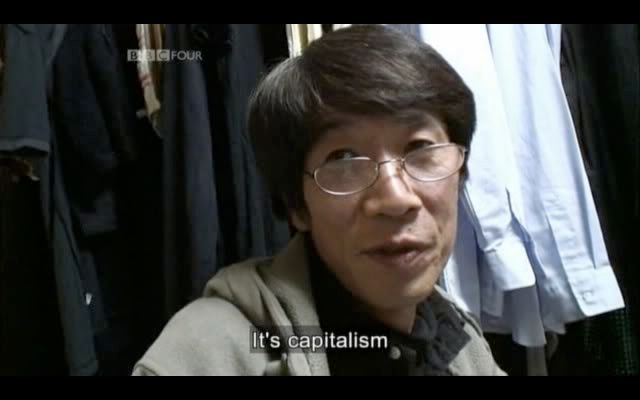
A lot of things are - Japan: a story of love & hate
But investment wasn't made in public healthcare or preventative medicine - which might affect the business practices of the agribusinesses so precious to the economy. Nor were rich countries willing to aid poorer nations' healthcare systems, particularly not after spending the last 30 years privatizing them. The villagers at the epicentre of the swine-flu outbreak knew something was wrong a month ago, but no one listened to them:
This may not be 'the big one', but one thing's for sure: it's not a natural epidemic. It's another capitalist crisis, to be lined up alongside global warming and foreclosures. I don't mean there are men in tophats in a back room, rubbing their hands and plotting the downfall of the world's poor. I mean that capitalism, as a system, is completely unable to take account of long-term consequences. A pandemic would shut borders and further cut trade, deepening the recession, making things worse for everyone. But the rule for all capitalists is profit or die, which means agribusiness cuts corners, governments cut costs and Big Pharma funds medicine, not prevention. Crisis is inevitable and people - particularly poor people - die.
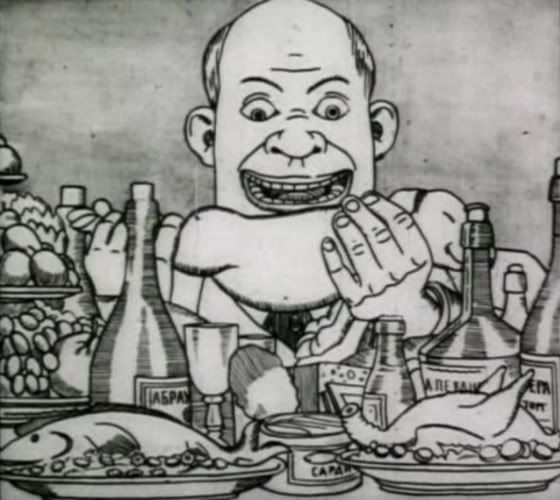
Mmm, that's a tasty metaphor for capitalist greed! - Soviet Toys
Finally, even a pandemic has its plusses and minuses. Minus: I'm smack in the middle of the swine flu's target age range:

"Are we safe yet?"
"Dunno, let's have another to be sure." - Looks & Smiles

And if not, why not? - Newswipe
I've written how our culture is suffused with catastrophe. People are faced with multiplying economic, social and ecological crises. They're unable to understand them as different facets of one larger crisis of the capitalist mode of production. Swine flu fills an existential void: we know it's a few minutes to midnight, and here's proof. Never mind that good old regular influenza kills a million people a year, and there are dozens of infectious diseases ravaging poor countries at any one moment. Swine flu is affecting us in the wealthy countries, so we have to care.

I'm waiting for the racist backlash to begin, when Mexicans start getting blamed for this crisis. In fact the pork-processing plant is owned by an American multinational with a shoddy environmental record:
Smithfield, which is led by pork baron Joseph W Luter III, has previously been fined for environmental damage in the US. In October 2000 the supreme court upheld a $12.6m (£8.6m) fine levied by the US environmental protection agency which found that the company had violated its pollution permits in the Pagan River in Virginia which runs towards Chesapeake Bay. The company faced accusations that faecal and other bodily waste from slaughtered pigs had been dumped directly into the river since the 1970s.
Survivors. I started watching the 1970s version of this and am now glad I stopped.
$12.6 million in exchange for decades of pollution - what's that, Smithfield's breakfast conference budget for a few fiscal quarters? The industrial meat industry is notorious for overcrowding, effluent run-off and overuse of antibiotics. Mike Davis brilliantly dissects their logic:
Animal husbandry in recent decades has been transformed into something that more closely resembles the petrochemical industry than the happy family farm depicted in school readers.The problem is not farm size per se: it's that economies of scale are only economical when environmental costs aren't considered. NAFTA devastated Mexico's rural economy, so it makes sense Mexicans would be happy to welcome an American agribusiness and not look too closely at what, after all, are industry-wide standards. Davis goes on to show this outbreak has been predicted for some time:
In 1965, for instance, there were 53m US hogs on more than 1m farms; today, 65m hogs are concentrated in 65,000 facilities. This has been a transition from old-fashioned pig pens to vast excremental hells, containing tens of thousands of animals with weakened immune systems suffocating in heat and manure while exchanging pathogens at blinding velocity with their fellow inmates.
Since its identification during the Great Depression, H1N1 swine flu had only drifted slightly from its original genome. Then in 1998 a highly pathogenic strain began to decimate sows on a farm in North Carolina and new, more virulent versions began to appear almost yearly.

A lot of things are - Japan: a story of love & hate
But investment wasn't made in public healthcare or preventative medicine - which might affect the business practices of the agribusinesses so precious to the economy. Nor were rich countries willing to aid poorer nations' healthcare systems, particularly not after spending the last 30 years privatizing them. The villagers at the epicentre of the swine-flu outbreak knew something was wrong a month ago, but no one listened to them:
Residents of the town of Perote said at the time that they had a new, aggressive bug — even taking to the streets to demonstrate against the pig farm they blamed for their illness — but were told they were suffering from a typical flu. It was only after U.S. labs confirmed a swine flu outbreak that Mexican officials sent the boy's sample in for swine flu testing.We face a patchwork of regulations and vaccine availability, based on the ability and willingness of governments to pay. And how much is a government going to spend to prevent something that might not happen?
This may not be 'the big one', but one thing's for sure: it's not a natural epidemic. It's another capitalist crisis, to be lined up alongside global warming and foreclosures. I don't mean there are men in tophats in a back room, rubbing their hands and plotting the downfall of the world's poor. I mean that capitalism, as a system, is completely unable to take account of long-term consequences. A pandemic would shut borders and further cut trade, deepening the recession, making things worse for everyone. But the rule for all capitalists is profit or die, which means agribusiness cuts corners, governments cut costs and Big Pharma funds medicine, not prevention. Crisis is inevitable and people - particularly poor people - die.

Mmm, that's a tasty metaphor for capitalist greed! - Soviet Toys
Finally, even a pandemic has its plusses and minuses. Minus: I'm smack in the middle of the swine flu's target age range:
The new strain seems to be more lethal to those in the 25 to 45 age range - an ominous sign, as this was a hallmark of the Spanish 1918 flu pandemic that killed tens of millions worldwide. Younger people were probably hit harder by the 1918 flu virus because their immune systems over-reacted.Here I thought I was making myself healthy: all that exercise, all that fruit and Vitamin D pills, and I was just toughening up my immune system so it'd overreact and kill me when the swine-flu hit. But that's the plus as well: if a healthy immune system is a danger, then I should be drinking, smoking and taking as many drugs as I can. That way the swine-flu will course through my body like a nasty hangover. I'm off down the pub to get immuno-compromised: who's with me?

"Are we safe yet?"
"Dunno, let's have another to be sure." - Looks & Smiles
Labels: agribusiness, catastrophe, pandemic, swine flu
Sunday, April 19, 2009
Ian Tomlison, Susan Boyle and Keri Ferrell
The only link between them is they're all on my mind this afternoon.
1) Ian Tomlinson
On April 1, protestors gathered in London to demonstrate against the G20 leadership of the capitalist world. The police responded by 'kettling' them into tight spaces and not letting them leave, much like corralling cattle. Those who got in the way were beaten, like Ian Tomlinson, a 47 year old newsvendor who was on his way home. He collapsed and later died.

Ian Tomlinson on his last walk.
At first the police claimed they helped Tomlinson when he collapsed, but protestors threw bottles at them. The right-wing net trolls leapt all over this, calling the demonstrators monstrous and subhuman. The cops investigated themselves and found nothing wrong; a coroner called the cause of death 'heart attack'. But flaws soon emerged in the story, chiefly because someone filmed Tomlinson being struck by the police. Soon things began to unravel. An independent investigation was launched; the officers involved were suspended; a new autopsy was conducted, finding the cause of death to be abdominal hemmorhage - internal bleeding. At this point, we may be looking at the first time (to my knowledge) a police officer could be charged with manslaughter.
Anyone who's ever gone to a global justice demonstration knows the police don't hold back from beating and bloodying those who get in their way. But this appears to be the tipping point where suddenly the demonstrators' stories start being believed. The head of the independent commission is reminding police they're the servants, not the masters of the people, and he credits videos by protestors' mobile phones with the evidence needed to prosecute.
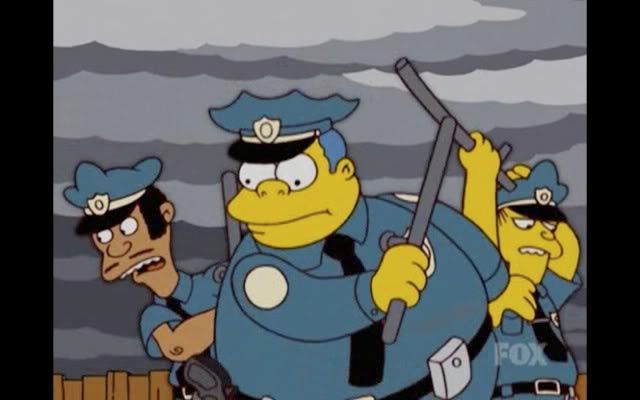
Just some bad apples.
It's sweet to see naive liberals up in arms about heavy-handed policing - it means they thought everything was working fine before. But more significant is that the words of hundreds of protestors over the years mean nothing. Even the police murders at Genoa only led to assault convictions. However, video evidence is enough to start heads rolling. All those new surveillance technologies interfere with the state's ability to suppress dissent. And as a society, we fetishize technology to the extent that it supplants the evidence of real people who, being 'biased', can't be believed.
2) Susan Boyle
She's the 47 year old Scottish spinster with a learning disability who spent her life looking after her mother and has never been kissed. Then, on Britain's Got Talent, she bucked expectations and proved she could sing.

I know it's corny. The whole thing looks staged: for one thing, why do the audience leap to their feet as soon as she starts singing? And Tanya Gold makes the excellent point that the drama of redemption wouldn't work unless we judged her for being hideous - and therefore a talentless hag - in the first place. Moreover, her story lends itself to the worst sort of merit-based triumphalism: the narrative that 'the little person can succeed against all odds' is very handy to capitalist ideology in a recession, when little people are getting stomped on. But that said, I found her performance touching. And maybe the 30 million youtube hits show people are willing to identify with the underdog, not the glamorous and powerful.
3) Kari Ferrell

Keri Ferrell. Pic used without permission, but that's kind of the point.
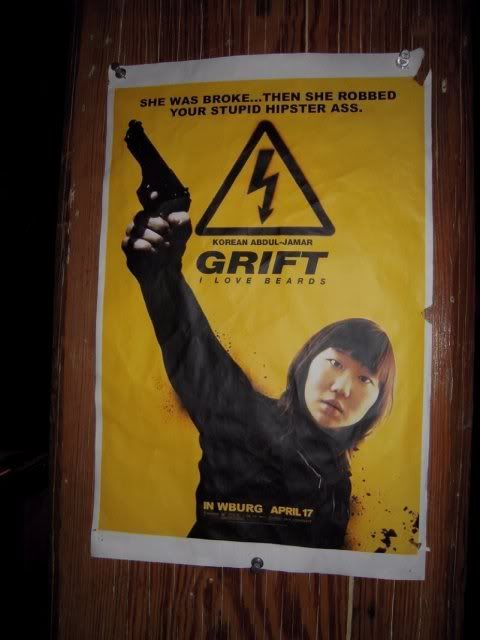
Kari Ferrell is the 'hipster grifter', a 22 year old Korean-American wanted for defrauding hipsters of $60,000. Coming out of the Salt Lake City punk scene, she used her sexuality to gain friends and borrow money from gob-smacked young scene boys (and some women.) Then she moved to Brooklyn, talked her way into a job at Vice Magazine, and went through a series of boyfriends, borrowing money from them and repaying them with cheques from a closed account. She's now on the run again.
I find Ferrell fascinating for a number of reasons. Firstly, she cultivated the hipster aesthetic: she even has a tattoo on her back that reads "I love beards." Secondly, she sounds less like a calculating fraud artist, and more like someone with borderline personality disorder: she told numerous friends she was dying of cancer, to the point of showing them bloodied kleenexes which she'd apparently coughed up blood into. She sounds like someone who desperately needs drama and the attention that flows from it. Thirdly, despite my ongoing dislike for hipsters, I don't think that having skinny jeans and plastic-slat sunglasses means you deserve to be ripped off. (Except if you work at the evil, reactionary Vice Magazine - in which case you deserve everything you get.) But she was smart enough to speak the hipster code, and inveigled herself into the scene by looking and speaking the right way.

Asian, therefore cute, therefore harmless? - Cibo Matto
Finally, she's a young Asian woman who doesn't fit the proper image of aggressive huckster. The stereotypes of race and gender she falls under are 'cute, exotic and harmless'. Cibo Matto, the 1990s alt-rock fronted by two Japanese women, struggled with the trope, which dictated that no matter how much funk & hip-hop they incorporated into their act, they were seen as 'quirky' first and musicians second. Ferrell made the best of what she was given. That doesn't make her a folk-hero, but if a desperate, needy woman found herself in a world that trusted cute, Asian women, I don't think it's her fault if she used that to her advantage.
Edit: a friend of mine forwarded this to me - frickin hilarious:
1) Ian Tomlinson
On April 1, protestors gathered in London to demonstrate against the G20 leadership of the capitalist world. The police responded by 'kettling' them into tight spaces and not letting them leave, much like corralling cattle. Those who got in the way were beaten, like Ian Tomlinson, a 47 year old newsvendor who was on his way home. He collapsed and later died.

Ian Tomlinson on his last walk.
At first the police claimed they helped Tomlinson when he collapsed, but protestors threw bottles at them. The right-wing net trolls leapt all over this, calling the demonstrators monstrous and subhuman. The cops investigated themselves and found nothing wrong; a coroner called the cause of death 'heart attack'. But flaws soon emerged in the story, chiefly because someone filmed Tomlinson being struck by the police. Soon things began to unravel. An independent investigation was launched; the officers involved were suspended; a new autopsy was conducted, finding the cause of death to be abdominal hemmorhage - internal bleeding. At this point, we may be looking at the first time (to my knowledge) a police officer could be charged with manslaughter.
Anyone who's ever gone to a global justice demonstration knows the police don't hold back from beating and bloodying those who get in their way. But this appears to be the tipping point where suddenly the demonstrators' stories start being believed. The head of the independent commission is reminding police they're the servants, not the masters of the people, and he credits videos by protestors' mobile phones with the evidence needed to prosecute.

Just some bad apples.
It's sweet to see naive liberals up in arms about heavy-handed policing - it means they thought everything was working fine before. But more significant is that the words of hundreds of protestors over the years mean nothing. Even the police murders at Genoa only led to assault convictions. However, video evidence is enough to start heads rolling. All those new surveillance technologies interfere with the state's ability to suppress dissent. And as a society, we fetishize technology to the extent that it supplants the evidence of real people who, being 'biased', can't be believed.
2) Susan Boyle
She's the 47 year old Scottish spinster with a learning disability who spent her life looking after her mother and has never been kissed. Then, on Britain's Got Talent, she bucked expectations and proved she could sing.

I know it's corny. The whole thing looks staged: for one thing, why do the audience leap to their feet as soon as she starts singing? And Tanya Gold makes the excellent point that the drama of redemption wouldn't work unless we judged her for being hideous - and therefore a talentless hag - in the first place. Moreover, her story lends itself to the worst sort of merit-based triumphalism: the narrative that 'the little person can succeed against all odds' is very handy to capitalist ideology in a recession, when little people are getting stomped on. But that said, I found her performance touching. And maybe the 30 million youtube hits show people are willing to identify with the underdog, not the glamorous and powerful.
3) Kari Ferrell

Keri Ferrell. Pic used without permission, but that's kind of the point.
Kari Ferrell is the 'hipster grifter', a 22 year old Korean-American wanted for defrauding hipsters of $60,000. Coming out of the Salt Lake City punk scene, she used her sexuality to gain friends and borrow money from gob-smacked young scene boys (and some women.) Then she moved to Brooklyn, talked her way into a job at Vice Magazine, and went through a series of boyfriends, borrowing money from them and repaying them with cheques from a closed account. She's now on the run again.
I find Ferrell fascinating for a number of reasons. Firstly, she cultivated the hipster aesthetic: she even has a tattoo on her back that reads "I love beards." Secondly, she sounds less like a calculating fraud artist, and more like someone with borderline personality disorder: she told numerous friends she was dying of cancer, to the point of showing them bloodied kleenexes which she'd apparently coughed up blood into. She sounds like someone who desperately needs drama and the attention that flows from it. Thirdly, despite my ongoing dislike for hipsters, I don't think that having skinny jeans and plastic-slat sunglasses means you deserve to be ripped off. (Except if you work at the evil, reactionary Vice Magazine - in which case you deserve everything you get.) But she was smart enough to speak the hipster code, and inveigled herself into the scene by looking and speaking the right way.

Asian, therefore cute, therefore harmless? - Cibo Matto
Finally, she's a young Asian woman who doesn't fit the proper image of aggressive huckster. The stereotypes of race and gender she falls under are 'cute, exotic and harmless'. Cibo Matto, the 1990s alt-rock fronted by two Japanese women, struggled with the trope, which dictated that no matter how much funk & hip-hop they incorporated into their act, they were seen as 'quirky' first and musicians second. Ferrell made the best of what she was given. That doesn't make her a folk-hero, but if a desperate, needy woman found herself in a world that trusted cute, Asian women, I don't think it's her fault if she used that to her advantage.
Edit: a friend of mine forwarded this to me - frickin hilarious:

Labels: hipsters, police, protestors, Susan Boyle
Thursday, April 16, 2009
Movie Review - Shaft in Africa
Most people know Shaft through his epynonymous first movie, in which Richard Roundtree plays John Shaft, hard-boiled private dick who'd risk his neck for a brother man. Shaft and its sequel, Shaft's Big Score, followed a predictable course in which Shaft fights both gangsters and police suspicions to right wrongs, save his life and get the girl.

Shaft in Africa takes the franchise in a completely different direction. An international gang of people smugglers replace the small-time hoods. Shaft is whisked from Harlem to Africa to pose as an immigrant labourer, and track down the traffickers exploiting young Africans. After many adventures he makes it to Europe, where he lives in an overcrowded tenement in Paris with other illegal workers. He must battle the smugglers to free the migrants - but not before their tenement is set on fire.

You read correctly: Shaft in Africa is a drama about the plight of illegal migrants sold into slavery in Europe. It could have been made yesterday; tenement fires in Paris are common, where undocumented workers are warehoused in sub-standard conditions to this day. To my knowledge, Hollywood has yet to touch the issue; the British film Dirty Pretty Things broached the topic of illegal workers in 2005, but the politics were a pale pink next to Shaft. In the former, Chiwetel Ejiofor sums up the immigrant experience with, "we are the people you do not see. We are the ones who drive your cabs. We clean your rooms. And suck your cocks." Which is true, but doesn't say why it's happening.
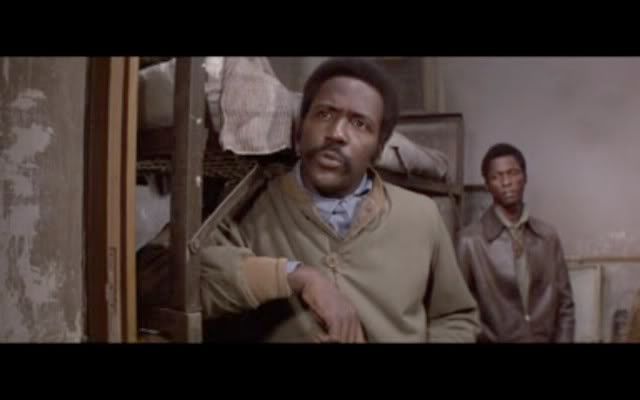
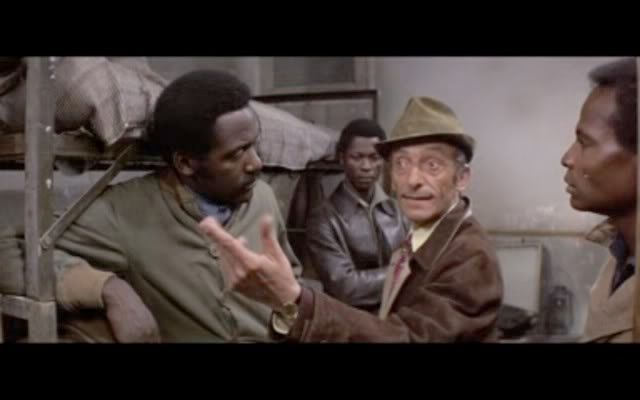
Compare this to Shaft, who encounters a smuggler overcharging him and the Africans for an overcrowded room in a tenement:
That's a good summary of the undocumented worker's condition: as long as you're illegal, the threat of deportation keeps you silent. At one point the smuggler shows his evil capitalist colours and rants, "I've given thousands of jobs to Africans and they don't complain. But because of that black bastard and that troublemaker Shaft I've had to leave this country!" Later, a French police sergeant tries to mollify Shaft after a fire in the tenement fire kills some of the Africans:
Shaft connects exploitation, racism and ghettos to the profit motive. No One Is Illegal couldn't say it better. And this wasn't some earnest documentary, it was an action film: though it lost money, the movies were popular enough that CBS tried to leverage Shaft into a TV series. We know illegal immigrants are the first to be targeted during a recession - imagine the impact of mainstream audiences encountering Shaft's sympathetic portrayal today. For that alone, Shaft in Africa is worth watching.
There's another reason to see the film. It's obvious you don't watch a movie named after a euphemism for a penis for progressive gender politics. His character is defined by his sexual prowess - though I suspect that, like a lot of blaxploitation films and hip hop afterwards, much of that is braggadocio, not meant to be taken seriously. Which is what makes Shaft in Africa so fascinating: it elevates Shaft (pun intended) to the status of a sex god. And not because he's good in bed, but because his penis is so large. It's like Shaft as told by Rainer Wolfcastle; there's absolutely no subtlety.
Shaft meets the girlfriend of the head smuggler, and she tries to seduce him:

Of course he relents, telling her "Baby my nose may not be too prominent, but I got two of the longest, thickest thumbs..."
And it gets better. Shaft meets an African princess, whose culture dictates she has her clitoris amputated on reaching 'womanhood'. She soon learns the ways of Shaft:
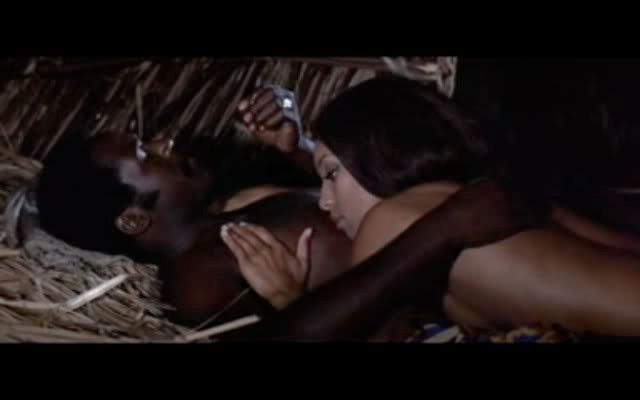
He didn't even have to send her to Clitoraid. Shaft's penis is so great, he can overturn entrenched cultural traditions with it. Yes, Shaft features a black man being objectified for his animal sexuality; yes, it reduces women to slavish conquests. But at this point my analytical ability breaks down and I'm simply dumbfounded that something like this could get written and filmed. Shaft is not a lover, he's a force of nature with transformative sexual powers... who's a friend of exploited migrant labour. Watch it and deconstruct it if you can.

Shaft in Africa takes the franchise in a completely different direction. An international gang of people smugglers replace the small-time hoods. Shaft is whisked from Harlem to Africa to pose as an immigrant labourer, and track down the traffickers exploiting young Africans. After many adventures he makes it to Europe, where he lives in an overcrowded tenement in Paris with other illegal workers. He must battle the smugglers to free the migrants - but not before their tenement is set on fire.

You read correctly: Shaft in Africa is a drama about the plight of illegal migrants sold into slavery in Europe. It could have been made yesterday; tenement fires in Paris are common, where undocumented workers are warehoused in sub-standard conditions to this day. To my knowledge, Hollywood has yet to touch the issue; the British film Dirty Pretty Things broached the topic of illegal workers in 2005, but the politics were a pale pink next to Shaft. In the former, Chiwetel Ejiofor sums up the immigrant experience with, "we are the people you do not see. We are the ones who drive your cabs. We clean your rooms. And suck your cocks." Which is true, but doesn't say why it's happening.

Compare this to Shaft, who encounters a smuggler overcharging him and the Africans for an overcrowded room in a tenement:
"Fellows, I take care of everything. Now, this room cost you each 100 francs a month.
We only earn 200 francs a month. For this room, we pay half.
No space in Paris. Very costly. No room, you in street. In street, police come. Ask questions, send you home. But how you go home? No money! So: go to prison. Lock up. 100 francs a month, everybody stay happy."

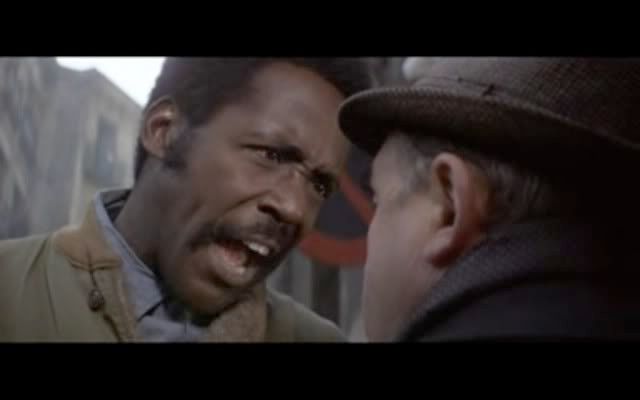
That's a good summary of the undocumented worker's condition: as long as you're illegal, the threat of deportation keeps you silent. At one point the smuggler shows his evil capitalist colours and rants, "I've given thousands of jobs to Africans and they don't complain. But because of that black bastard and that troublemaker Shaft I've had to leave this country!" Later, a French police sergeant tries to mollify Shaft after a fire in the tenement fire kills some of the Africans:
"The law will punish him, monsieur."
"Fuck the law. What is the law doing about the shitheads who charge 100 Francs a month to stay in a craphouse like this? Why don't you really clamp down on the slave trade? I'll tell you why. Because the black ghettos of Paris is as far away from the Champs Elysee as 125th Street is from Park Avenue. You need a bunch of poor bastards to work on your roads and your goddamn kitchens. So don't lay any of that 'law will punish you' shit on me!"

Shaft connects exploitation, racism and ghettos to the profit motive. No One Is Illegal couldn't say it better. And this wasn't some earnest documentary, it was an action film: though it lost money, the movies were popular enough that CBS tried to leverage Shaft into a TV series. We know illegal immigrants are the first to be targeted during a recession - imagine the impact of mainstream audiences encountering Shaft's sympathetic portrayal today. For that alone, Shaft in Africa is worth watching.

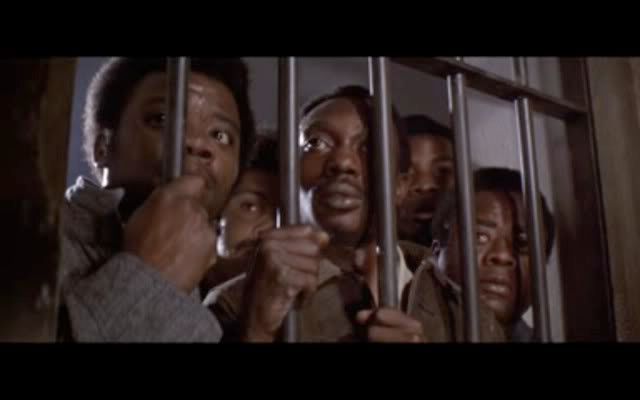
There's another reason to see the film. It's obvious you don't watch a movie named after a euphemism for a penis for progressive gender politics. His character is defined by his sexual prowess - though I suspect that, like a lot of blaxploitation films and hip hop afterwards, much of that is braggadocio, not meant to be taken seriously. Which is what makes Shaft in Africa so fascinating: it elevates Shaft (pun intended) to the status of a sex god. And not because he's good in bed, but because his penis is so large. It's like Shaft as told by Rainer Wolfcastle; there's absolutely no subtlety.

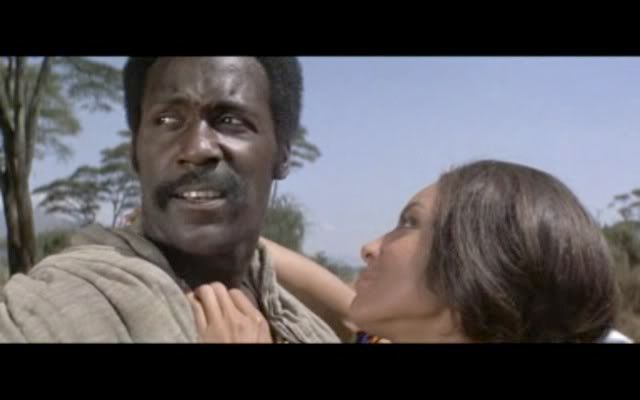
Shaft meets the girlfriend of the head smuggler, and she tries to seduce him:
"How long is your phallus, Mr. Shaft?"
"My what?"
"Your cock."
"Baby by now it shrunk down to 20 inches..."
"You can usually tell by the size of a man's nose. Or the length and thickness of his thumbs. I always look for a man with a prominent nose. And long thick thumbs."
"Baby you're not turning me on. I got too many things on my mind."

Of course he relents, telling her "Baby my nose may not be too prominent, but I got two of the longest, thickest thumbs..."
And it gets better. Shaft meets an African princess, whose culture dictates she has her clitoris amputated on reaching 'womanhood'. She soon learns the ways of Shaft:
"Were you disappointed I wasn't a virgin? Hmm?"
"Hell no baby, you had some good teacher."
"John, this is hardly the time to talk about it, but I've made an important decision. Because of you."
"Well, my daddy told me, he said John, the one time you should never ever make an important decision is right after you've made love."
"It's about my clitorectomy."
"That's an important decision all right."
"February comes, I'm not going to let them do it."

He didn't even have to send her to Clitoraid. Shaft's penis is so great, he can overturn entrenched cultural traditions with it. Yes, Shaft features a black man being objectified for his animal sexuality; yes, it reduces women to slavish conquests. But at this point my analytical ability breaks down and I'm simply dumbfounded that something like this could get written and filmed. Shaft is not a lover, he's a force of nature with transformative sexual powers... who's a friend of exploited migrant labour. Watch it and deconstruct it if you can.
Labels: blaxploitation, movie review, Shaft in Africa
Tuesday, March 24, 2009
Book Review - Days of Hope, Andre Malraux
Days of Hope tells the story of a panoply of revolutionaries as they struggle against Franco in the Spanish Civil War. The book spans the events of 1936: Franco's initial uprising against the Republicans, and the repeated military engagements leading to Franco's unsuccessful attempt to take Madrid.

This is a military history of the Spanish Civil War, which is the book's strength and weakness. Malraux is an incredibly gifted writer. He takes us through breathtaking vistas of Spanish countryside, and the bombing of civilian Madrid, with a confident pen that contrasts the stark horrors of war with the small details of everyday life. The narrative weaves like a camera between dozens of different players:
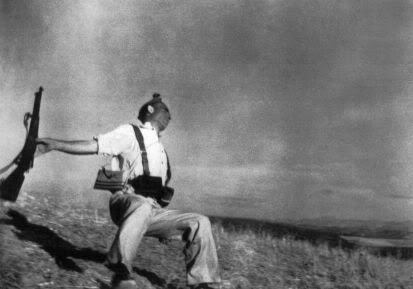
This isn't solely due to Malraux's descriptive skill. Characters take long pages to explain their motivations. The Negus, a bearded anarchist, rails against all authority; Manuel, a young Communist officer, grows to accept his responsibilities as a leader; Slade, an American journalist, tries to stay aloof from the barbarity around him. Dozens more share their thoughts - and these are not normal thoughts. Well-crafted statements on politics, morality and philosophy emerge fully-formed in casual conversation. It took me months to read Days of Hope, because I kept getting lost trying to follow the complex threads of discussion. Malraux can be justly accused of making his characters mouthpieces for his own views. But to his credit, the ideas he's promulgating are bold.
This is the biggest strength of Days of Hope. In these post-ideological times, it's hard to remember that millions of people flocked to different revolutionary banners. Malraux's characters talk about the relation between Party and state, what makes someone pick up a gun to fight for socialism, the role of revolution in history. These are all conversations I've had with individuals: Malraux puts them on an epic scale, where they belong. If anything, the current capitalist crisis may provoke others to return to these questions:
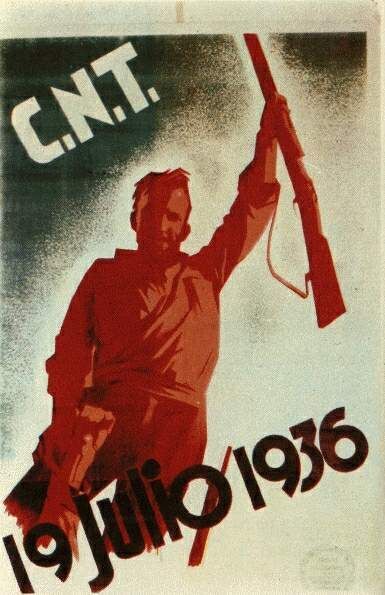
It would be easy to leave the story there, as a tale of intelligent bravado, content in misty nostalgia for the days when the Left pulled its weight in the world. But it's precisely this focus on war and heroism that mark Days of Hope as flawed.
First of all, there are no major women characters. Women are spoken of fondly by the soldiers, and here and there they appear as themselves - mainly elderly peasants fleeing the bombardment. I'm against including characters for what they represent, but it's an historical fact that women fought in the front lines in Spain. Their absence makes Malraux's work less the manly treatise on brotherly sacrifice he wants it to be, and more an attempt to deny women's place in history altogether.
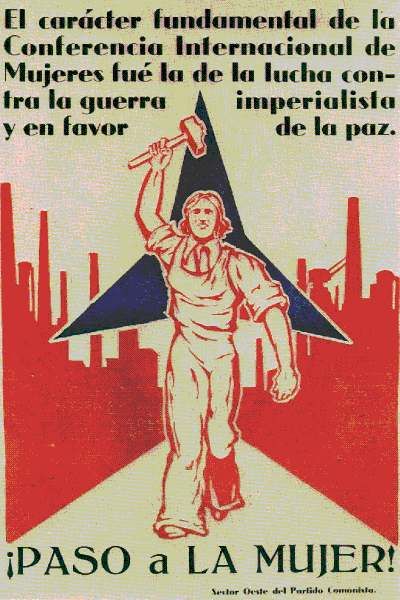
Secondly, the focus on war shrouds a bigger point. Of course it was a war - but what marked Spain was that it was also a revolution, against the bourgeoisie, landed property and the church. The tragedy of Spain is that the Communist Party, under directions from Stalin, turned the revolution into a regular war between armies. Arrayed against the combined forces of Franco, Italy and Spain, it was a war they were bound to lose. Land and Freedom makes this point well, as does Homage to Catalonia.
However, Malraux is telling the story of the war and the Communists and anarchists who fought it. The revolution, when it does get mentioned, is the domain of starry-eyed idealists who are long on enthusiasm and short on discipline. Here's an exchange between two officers, Garcia, a leftist, and Hernandez, a Catholic officer in the Republican army. Garcia tells him
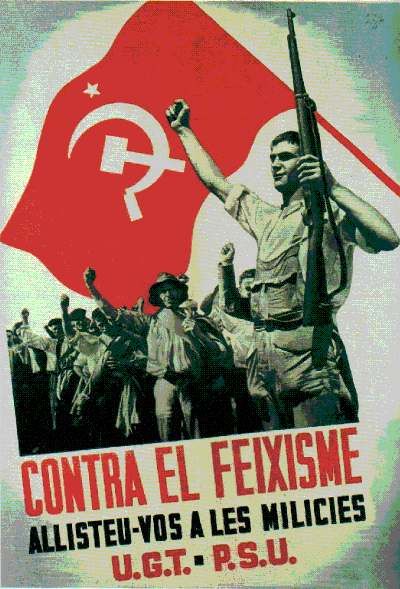
Malraux was not an arm-chair intellectual. He organized shipments of planes and crews from France to fight for Spain, and toured America to raise money for the Republican cause. However, he famously ended up a Gaullist, and in Days of Hope one can see the roots of opportunism, 'the end justifies the means' which changes the ends altogether, from liberation to dictatorship. That does not detract from the novel's power or beauty, but it is an object lesson in the dangers of losing sight of one's goal.
In the single passage Malraux names women revolutionaries, the journalist Slade is caught in the bombardment of Madrid by fascists. He hears a "rhythmically uttered phrase":
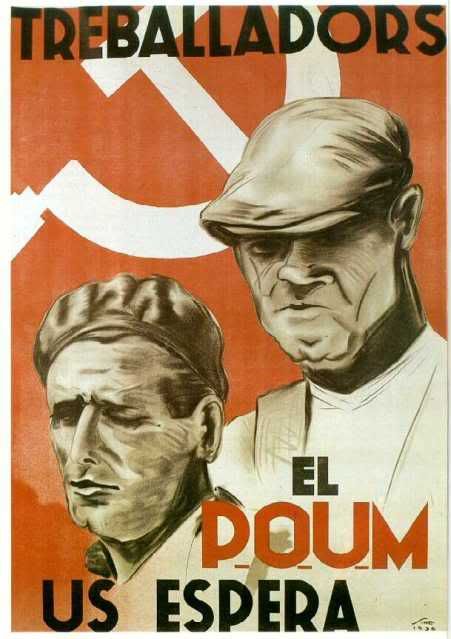
This is the strength of Malraux's work: whatever his trajectory, he understood not only the battle for human freedom, but how it's a battle for ordinary people to fight and win.

This is a military history of the Spanish Civil War, which is the book's strength and weakness. Malraux is an incredibly gifted writer. He takes us through breathtaking vistas of Spanish countryside, and the bombing of civilian Madrid, with a confident pen that contrasts the stark horrors of war with the small details of everyday life. The narrative weaves like a camera between dozens of different players:
"All the morning," Moreno said, "I've felt as if an earthquake were taking place." He meant that it was not so much fear of the fascists that gripped the crowd as the sort of terror a cataclysm inspires; the idea of 'giving in' never entered their heads - one doesn't talk of giving in to an earthquake.It's impossible not to be drawn in by the chaos. I haven't felt so gripped by a war narrative since playing Call of Duty 2.
To a jangle of bells an ambulance sped past.
A black crash and the glasses on the tables sprang up like toy rabbits into the air and landed tinkling back amongst saucers, spilt liquor and V-shaped splinters from the windows. The panes had caved in like drum-heads as the bomb exploded on the boulevard outside. A waiter's tray toppled over, bounded on the floor with a thin clash of cymbals, muted by the silence.(314)

This isn't solely due to Malraux's descriptive skill. Characters take long pages to explain their motivations. The Negus, a bearded anarchist, rails against all authority; Manuel, a young Communist officer, grows to accept his responsibilities as a leader; Slade, an American journalist, tries to stay aloof from the barbarity around him. Dozens more share their thoughts - and these are not normal thoughts. Well-crafted statements on politics, morality and philosophy emerge fully-formed in casual conversation. It took me months to read Days of Hope, because I kept getting lost trying to follow the complex threads of discussion. Malraux can be justly accused of making his characters mouthpieces for his own views. But to his credit, the ideas he's promulgating are bold.
This is the biggest strength of Days of Hope. In these post-ideological times, it's hard to remember that millions of people flocked to different revolutionary banners. Malraux's characters talk about the relation between Party and state, what makes someone pick up a gun to fight for socialism, the role of revolution in history. These are all conversations I've had with individuals: Malraux puts them on an epic scale, where they belong. If anything, the current capitalist crisis may provoke others to return to these questions:
"For a thinker, the revolution's a tragedy. But for such a man, life, too, is tragic. And if he is counting on the revolution to abolish his private tragedy, he's making a mistake - that's all... There aren't umpteen ways to fight, there's only one and that's to fight to win. One doesn't engage in a war or revolution just to please oneself." (339)

It would be easy to leave the story there, as a tale of intelligent bravado, content in misty nostalgia for the days when the Left pulled its weight in the world. But it's precisely this focus on war and heroism that mark Days of Hope as flawed.
First of all, there are no major women characters. Women are spoken of fondly by the soldiers, and here and there they appear as themselves - mainly elderly peasants fleeing the bombardment. I'm against including characters for what they represent, but it's an historical fact that women fought in the front lines in Spain. Their absence makes Malraux's work less the manly treatise on brotherly sacrifice he wants it to be, and more an attempt to deny women's place in history altogether.

Secondly, the focus on war shrouds a bigger point. Of course it was a war - but what marked Spain was that it was also a revolution, against the bourgeoisie, landed property and the church. The tragedy of Spain is that the Communist Party, under directions from Stalin, turned the revolution into a regular war between armies. Arrayed against the combined forces of Franco, Italy and Spain, it was a war they were bound to lose. Land and Freedom makes this point well, as does Homage to Catalonia.
However, Malraux is telling the story of the war and the Communists and anarchists who fought it. The revolution, when it does get mentioned, is the domain of starry-eyed idealists who are long on enthusiasm and short on discipline. Here's an exchange between two officers, Garcia, a leftist, and Hernandez, a Catholic officer in the Republican army. Garcia tells him
"Because you have to live politically, you have to act in terms of politics; and your duties as an officer bring you every moment into touch with politics. Whereas the cause you have in mind is not political. It is based on the contrast between the world in which you live and the world of your dreams. But action can only be envisaged in terms of action. The business of a political thinker is to compare one set of hard facts with another... our side or Franco's; one system or another system. He is not fighting against a dream, a theory, or another Apocalyptic visiion."In revolutionary Spain, comparing "one set of hard facts with another" led to the Communists disbanding revolutionary brigades, and unleashing secret police terror on anarchists and non-Communists alike. It led to a ban on factory and land take-overs by workers, and returning property to the hated clerical aristocracy - all in the name of discipline.
"It is only for a dream's sake that men die."
"Hernandez, the habit of thinking about what ought to be instead of what can actually be done is a mental poison... Moral 'uplift' and magnanimity are matters for the individual, with which the revolution has no direct concern; far from it. I am very much afraid the only link between them, as far as you're concerned, is the prospect you may lay down your life in the cause of both." (183)

Malraux was not an arm-chair intellectual. He organized shipments of planes and crews from France to fight for Spain, and toured America to raise money for the Republican cause. However, he famously ended up a Gaullist, and in Days of Hope one can see the roots of opportunism, 'the end justifies the means' which changes the ends altogether, from liberation to dictatorship. That does not detract from the novel's power or beauty, but it is an object lesson in the dangers of losing sight of one's goal.
In the single passage Malraux names women revolutionaries, the journalist Slade is caught in the bombardment of Madrid by fascists. He hears a "rhythmically uttered phrase":
At last Slade guessed what it was, though he could not catch the words. He had heard the same rhythmic chant a month previously. In response to words he could not hear, that human gong was beating out: "No pasaran." Slade had seen La Passionaria, dark, austere, widow of all the slain Asturians, had seen her leading a fierce and solemn procession marching beneath red banners inscribed with her famous phrase, Better be a hero's widow than a coward's wife, had heard twenty thousand women chanting, in answer to another long, incomprehensible phrase, this same refrain: "No pasaran." He had been less moved by them than by this smaller, but unseen, crowd, whose desperate courage rose towards him through the smoke-clouds of the burning city. (331)

This is the strength of Malraux's work: whatever his trajectory, he understood not only the battle for human freedom, but how it's a battle for ordinary people to fight and win.
Labels: Communism, Days of Hope, fascism, Malraux, Spanish Civil War
Monday, February 23, 2009
The End Is Nigh, Part Two
(Read Part One here.)
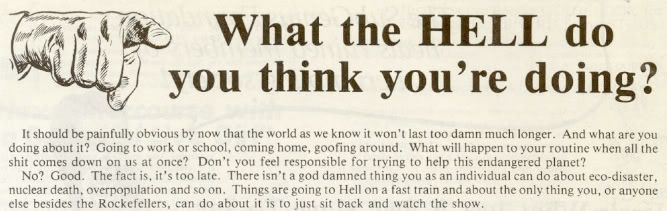
Examine the above ad for a moment. It’s quite clever, ironic and nihilistic. But this isn’t post-millenial angst for the jaded, post-everything generation: it’s from 1980.
30 year old Doomsterism sounds exactly the same as Doomsterism today. If you keep harping on about catastrophe, your predictions may one day be borne out (in a distorted, ahistoric way.) But as Keynes said, in the long run everybody dies. This gets you no further to understanding reality, let alone changing it.
Peak Oil
Reality of late has not been kind to the Doomsters. Remember last year’s oil price spike? Peak oil advocates predicted further rises. The spectacular drop in prices to $40 a barrel, less than half of last year's spike, has done nothing to dent their enthusiasm. Rather, the dip is simply due to volatility, and it won't last. Oil will hit $300 a barrel, and then: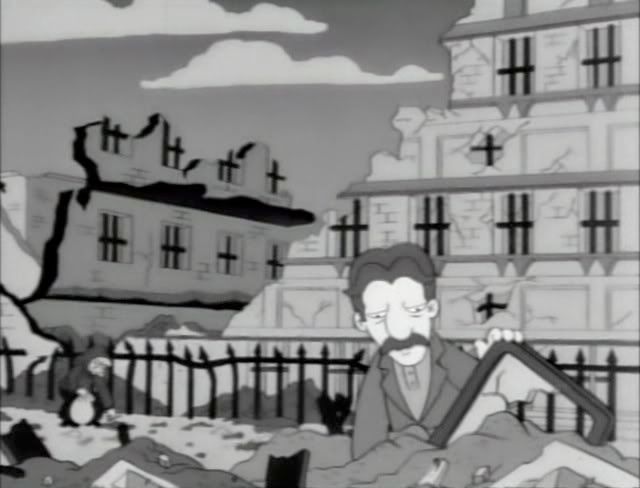
Something to look forward to?
Peak oil predicts rising oil prices, and then the exact opposite happens. I'd kindly suggest that blaming everything on "volatility" is intellectually bankrupt. As a friend pointed out to me, even a stuck, broken clock is right twice a day. Since the Doomsters can't even explain the symptoms of what they're seeing, they certainly can't understand the cause.
After all, the Doomsters have been predicting crises for decades. Yet when the biggest crisis in the post-WW2 era hit, it had nothing to do with finite resource supplies, and everything to do with toxic debt and an overaccumulation of surplus capital. The social conditions of production caused the current crisis: the contradiction between the use-value of what humanity produces, and the profit that capitalists expected to make on that production. Surplus profits fuelled massive speculation, as capital that couldn't be invested profitably today sought future profits in esoteric futures.

Hand it over
Capitalist radicals
Where did the Doomsters get the idea that capitalism is based on physical, technical conditions of production? For all its counter-cultural cachet, this comes straight from bourgeois economics. According to every neoclassical economist, capitalism is a straight adding-up of land, labour and capital. Workers, landlords and capitalists bring what they have to the market, and receive the value of that contribution in wages, rent and revenue. This led to any number of technical 'fixes' for capitalism by its apologists: change the amount of inputs, free the market and let it regulate production, or regulate the market to adjust for disequilibrium. But for god's sakes leave the system as it is.
This is pure fantasy, peddled by the powerful. Marx saw that the system was not neutral: it grinds on because people have no choice but to participate. They have nothing to sell but their labour power. Capitalists regulate production - but they do so individually, trying to determine social need in a chaotic war of all-against-all. Wealth gets created socially, and appropriated individually. Or more prosaically, stolen by the capitalist class from the workers.
"Accompanied by Mr. Moneybags and by the possessor of labour-power, we therefore take leave for a time of this noisy sphere, where everything takes place on the surface and in view of all men, and follow them both into the hidden abode of production, on whose threshold there stares us in the face 'No admittance except on business.'" Capital Vol. 1, Ch. 6 - Straight Time
The system is governed by power, a set of social relations of exploitation. Physical, finite limits matter to the extent that capitalists will grab whatever they can to compete. But the causes and effects of crisis are purely social. Even when physical limits begin to impose themselves on the capitalist system - like global warming - the winners and losers are determined by who has command over capital.
It's your fault
Recently, a Doomster on a Guardian.co.uk comment box enthused that the recession was a chance for us to correct our ways: we'd been over-using our resources, but Mother Earth was giving us a second chance. Here's a milder version from Nikiforuk et al:
Why weren't you saving your capital? - Soy Cuba
In his denunciation of lifestyle anarchism, Murray Bookchin gives a marvellous account of those who substitute how they live for political struggle:
Apparently - Sexjack
Of course, the fantasists of doom have no understanding of where hunger, poverty or environmental destruction come from, other than vague notions of ‘industrialism’ and technology (though not, apparently, when it comes to the machines making their canning jars, cycling parts or solar panels.) They want to do away with the washing machines – and thus they want to do away with the working women and children who use them. The catastrophe literature seethes with barely-veiled contempt for the people who don’t ‘get it’ i.e. everybody else. Carlsson quotes an ecologist who argues

Too many Midnight Madness sales - Deadset
To be fair, there’s a kernel of truth in this: consumerism is a compensation for the alienating conditions of work we’re forced to do. But it doesn’t erase the contradictions. Chief among those is that consumption is not a bad choice by stupid people - it’s a strategy for capitalist expansion. As Ernest Mandel argues, capitalism must “create a genuine world market for all its commodities instead of only for the luxury goods which were traded internationally in the pre-capitalist age. The cheap mass production made possible by capitalist large industry was the most important weapon in this process” (310).
Note the past-tense: mass production and mass consumption have already happened. They’re not a choice. Why? Because “Capital by its very nature tolerates no geographical limits to its expansion. Its historical ascent led to the levelling of regional boundaries and the formation of large national markets, which laid the foundation for the creation of the modern nation state.” (310)

The potential unleashed by mass production is enormous
Racist localism
National markets? Nation-states? What do people who just want to grow their own vegetables and chortle as the urban masses revert to cannibalism have to say about that? Nothing: back to the catch-all answer, catastrophe. It will shear – or, more accurately, cull – the sheep. The move to ‘small and sustainable’, argued for by every Doomster and localist, never says what to do about the large population which would assuredly become unsustainable, as soon as those basic industries shut down. We just need fewer people. Eric Schumacher, founder of Buddhist economics and author of the much-lauded, ‘pacifist’ Small Is Beautiful, denounces large-scale production and has this to say about the people drawn into it:
Why can't you understand how irresponsible you are?
If you believe catastrophe is inevitable from industrialism, technology and size, then the answer is to keep people from pursuing those things. Local communities for local people. Self-described left-winger Lyle Estill has this to say of people who come from far away: “People who live in a community have a vested interest in strengthening that community. Those are the ones who accept and receive local currency. People who live far away take their expertise, and their spending power, home with them each night.” (173) Why not make it simpler and just say, “Immigrants take our jobs.” Because that’s the racist, anti-immigrant argument Doomsterism boils down to. If you think that people can choose their own role in capitalist economy, then they are at fault for choosing to move – for being too greedy and wanting to consume more. Workers don't have a right to travel where capital does: they should stay put and starve.
The Doomsters live in a comfortable bubble inside the imperialist world. They don’t see the barbarism that envelopes the poor everywhere and can posit their fears of collapse as something unique. They substitute industrialism, technology or people’s stupidity for the inherent drive of capitalism to expand. If you can’t see the cause, then you can’t see the solution – ergo, there is none, and catastrophe is the inevitable result. None of those things can be changed by collective action: on the contrary, the mass of people are to blame. All we can do is wait for the collapse. The misanthropy close to the surface of every Doomster’s heart quickly turns to racism.
Easy if you're a disenchanted liberal - Un Conte de Noel
Unlike me, Ernest Mandel is able to keep a cool head around these people:
La Commune
None of which is to deny that workers’ struggle is at a low ebb. But as the economic crisis deepens, and people begin to resist the imposition of austerity – as they’ve done in Iceland, Greece and France, to name a few examples – they will look for political leadership. British police are predicting a summer of rage from laid-off workers. Localists and Doomsters have nothing to say to them: their abstract, dystopian imaginings live outside the realities of most people. Fearing the sky is falling doesn’t absolve you from finding a way to prevent it, right now.

Examine the above ad for a moment. It’s quite clever, ironic and nihilistic. But this isn’t post-millenial angst for the jaded, post-everything generation: it’s from 1980.
30 year old Doomsterism sounds exactly the same as Doomsterism today. If you keep harping on about catastrophe, your predictions may one day be borne out (in a distorted, ahistoric way.) But as Keynes said, in the long run everybody dies. This gets you no further to understanding reality, let alone changing it.
Peak Oil
Reality of late has not been kind to the Doomsters. Remember last year’s oil price spike? Peak oil advocates predicted further rises. The spectacular drop in prices to $40 a barrel, less than half of last year's spike, has done nothing to dent their enthusiasm. Rather, the dip is simply due to volatility, and it won't last. Oil will hit $300 a barrel, and then:
"It will be a slow deterioration in our quality of life, in the reliability of transportation, in the availability of certain foods as well as price spikes for food," [author Andrew] Nikiforuk said.
"It will cause pandemonium in both the public and private spheres."

Something to look forward to?
Peak oil predicts rising oil prices, and then the exact opposite happens. I'd kindly suggest that blaming everything on "volatility" is intellectually bankrupt. As a friend pointed out to me, even a stuck, broken clock is right twice a day. Since the Doomsters can't even explain the symptoms of what they're seeing, they certainly can't understand the cause.
After all, the Doomsters have been predicting crises for decades. Yet when the biggest crisis in the post-WW2 era hit, it had nothing to do with finite resource supplies, and everything to do with toxic debt and an overaccumulation of surplus capital. The social conditions of production caused the current crisis: the contradiction between the use-value of what humanity produces, and the profit that capitalists expected to make on that production. Surplus profits fuelled massive speculation, as capital that couldn't be invested profitably today sought future profits in esoteric futures.

Hand it over
Capitalist radicals
Where did the Doomsters get the idea that capitalism is based on physical, technical conditions of production? For all its counter-cultural cachet, this comes straight from bourgeois economics. According to every neoclassical economist, capitalism is a straight adding-up of land, labour and capital. Workers, landlords and capitalists bring what they have to the market, and receive the value of that contribution in wages, rent and revenue. This led to any number of technical 'fixes' for capitalism by its apologists: change the amount of inputs, free the market and let it regulate production, or regulate the market to adjust for disequilibrium. But for god's sakes leave the system as it is.
This is pure fantasy, peddled by the powerful. Marx saw that the system was not neutral: it grinds on because people have no choice but to participate. They have nothing to sell but their labour power. Capitalists regulate production - but they do so individually, trying to determine social need in a chaotic war of all-against-all. Wealth gets created socially, and appropriated individually. Or more prosaically, stolen by the capitalist class from the workers.

"Accompanied by Mr. Moneybags and by the possessor of labour-power, we therefore take leave for a time of this noisy sphere, where everything takes place on the surface and in view of all men, and follow them both into the hidden abode of production, on whose threshold there stares us in the face 'No admittance except on business.'" Capital Vol. 1, Ch. 6 - Straight Time
The system is governed by power, a set of social relations of exploitation. Physical, finite limits matter to the extent that capitalists will grab whatever they can to compete. But the causes and effects of crisis are purely social. Even when physical limits begin to impose themselves on the capitalist system - like global warming - the winners and losers are determined by who has command over capital.
It's your fault
Recently, a Doomster on a Guardian.co.uk comment box enthused that the recession was a chance for us to correct our ways: we'd been over-using our resources, but Mother Earth was giving us a second chance. Here's a milder version from Nikiforuk et al:
"Save your capital. Reduce your consumption. A lot. Make yourself accessible to mass transit," Hughes said. "And forget about buying things at Wal-Mart that were shipped here from halfway around the world."I'll forget for a moment the ludicrous idea that any of us have capital to save. The important point here is his moralism. Once the crisis hits - and he's talking about the oil crisis, not the recession - the solution is changing individual behaviour. This is the essence of capitalist ideology: we're sovereign consumers. Those who don't shift their market preferences are "fat and lazy". Blame the individual.
"You prepare by walking more, operating one vehicle. You prepare by buying more food locally and talking to your friends about getting engaged in the political process," said Nikiforuk. "Oil has made us fat and lazy.

Why weren't you saving your capital? - Soy Cuba
In his denunciation of lifestyle anarchism, Murray Bookchin gives a marvellous account of those who substitute how they live for political struggle:
“Today, dabbling in primitivism is precisely the privilege of affluent urbanites who can afford to toy with fantasies denied not only to the hungry and poor... but to the overworked employed. Modern working women with children could hardly do without washing machines to relieve them, however minimally, from their daily domestic labors". (49)

Apparently - Sexjack
Of course, the fantasists of doom have no understanding of where hunger, poverty or environmental destruction come from, other than vague notions of ‘industrialism’ and technology (though not, apparently, when it comes to the machines making their canning jars, cycling parts or solar panels.) They want to do away with the washing machines – and thus they want to do away with the working women and children who use them. The catastrophe literature seethes with barely-veiled contempt for the people who don’t ‘get it’ i.e. everybody else. Carlsson quotes an ecologist who argues
“’our whole society is like a teenager who wants to have it all, have it now, without consequences.’ A culture that simultaneously glorifies and fears adolescence while promoting a shallow hedonism is perfectly suited to the mass consumerism that underpins modern capitalism.” (72)We’re teenagers who don’t think about the consequences. We turned into sheeple because of consumerism: “People were encouraged to express their individuality by owning distinctive products, from cars and clothes to furniture and books, a process that helped turn ‘the masses’ into self-expressing individuals committed to their uniqueness rather than their shared realities.” (173) Somehow, as soon as we got bright, pretty baubles to look at, we forgot about struggle.

Too many Midnight Madness sales - Deadset
To be fair, there’s a kernel of truth in this: consumerism is a compensation for the alienating conditions of work we’re forced to do. But it doesn’t erase the contradictions. Chief among those is that consumption is not a bad choice by stupid people - it’s a strategy for capitalist expansion. As Ernest Mandel argues, capitalism must “create a genuine world market for all its commodities instead of only for the luxury goods which were traded internationally in the pre-capitalist age. The cheap mass production made possible by capitalist large industry was the most important weapon in this process” (310).
Note the past-tense: mass production and mass consumption have already happened. They’re not a choice. Why? Because “Capital by its very nature tolerates no geographical limits to its expansion. Its historical ascent led to the levelling of regional boundaries and the formation of large national markets, which laid the foundation for the creation of the modern nation state.” (310)

The potential unleashed by mass production is enormous
Racist localism
National markets? Nation-states? What do people who just want to grow their own vegetables and chortle as the urban masses revert to cannibalism have to say about that? Nothing: back to the catch-all answer, catastrophe. It will shear – or, more accurately, cull – the sheep. The move to ‘small and sustainable’, argued for by every Doomster and localist, never says what to do about the large population which would assuredly become unsustainable, as soon as those basic industries shut down. We just need fewer people. Eric Schumacher, founder of Buddhist economics and author of the much-lauded, ‘pacifist’ Small Is Beautiful, denounces large-scale production and has this to say about the people drawn into it:
the movement of populations, except in periods of disaster, was confined to persons who had a very special reason to move...
But now everything and everybody has become mobile. All structures are threatened, and all structures are vulnerable to an extent that they have never been before.” (51)

Why can't you understand how irresponsible you are?
If you believe catastrophe is inevitable from industrialism, technology and size, then the answer is to keep people from pursuing those things. Local communities for local people. Self-described left-winger Lyle Estill has this to say of people who come from far away: “People who live in a community have a vested interest in strengthening that community. Those are the ones who accept and receive local currency. People who live far away take their expertise, and their spending power, home with them each night.” (173) Why not make it simpler and just say, “Immigrants take our jobs.” Because that’s the racist, anti-immigrant argument Doomsterism boils down to. If you think that people can choose their own role in capitalist economy, then they are at fault for choosing to move – for being too greedy and wanting to consume more. Workers don't have a right to travel where capital does: they should stay put and starve.
The Doomsters live in a comfortable bubble inside the imperialist world. They don’t see the barbarism that envelopes the poor everywhere and can posit their fears of collapse as something unique. They substitute industrialism, technology or people’s stupidity for the inherent drive of capitalism to expand. If you can’t see the cause, then you can’t see the solution – ergo, there is none, and catastrophe is the inevitable result. None of those things can be changed by collective action: on the contrary, the mass of people are to blame. All we can do is wait for the collapse. The misanthropy close to the surface of every Doomster’s heart quickly turns to racism.

Easy if you're a disenchanted liberal - Un Conte de Noel
Unlike me, Ernest Mandel is able to keep a cool head around these people:
“Philosophers who fall prey to the fetishism of technology and overestimate the ability of late capitalism to achieve the integration of the masses, typically forget the fundamental contradiction between use-value and exchange-value by which capitalism is riven, when they seek to prove the hopelessness of popular resistance...” (507)This means that, no matter how much use consumers get from mass production, they are still driven to sell their labour power for a wage in order to survive. Due to that contradiction, capitalism is not stable: it must drive down wages and living conditions to maintain profits. Technology, industrialism, and people who watch Survivor are a symptom, not a cause. More importantly, the unthinking consumers who the Doomsters condemn, and the localists chide, contain the seeds of the solution. The workers’ grudging acceptance of capitalism co-exists with a deep hatred of its exploitation and misery. Collective action against capitalism can bring the irrational drives of expansion under rationally planned, democratic control.

La Commune
None of which is to deny that workers’ struggle is at a low ebb. But as the economic crisis deepens, and people begin to resist the imposition of austerity – as they’ve done in Iceland, Greece and France, to name a few examples – they will look for political leadership. British police are predicting a summer of rage from laid-off workers. Localists and Doomsters have nothing to say to them: their abstract, dystopian imaginings live outside the realities of most people. Fearing the sky is falling doesn’t absolve you from finding a way to prevent it, right now.
Labels: class consciousness, credit crisis, Doomsters, localism, Peak Oil


